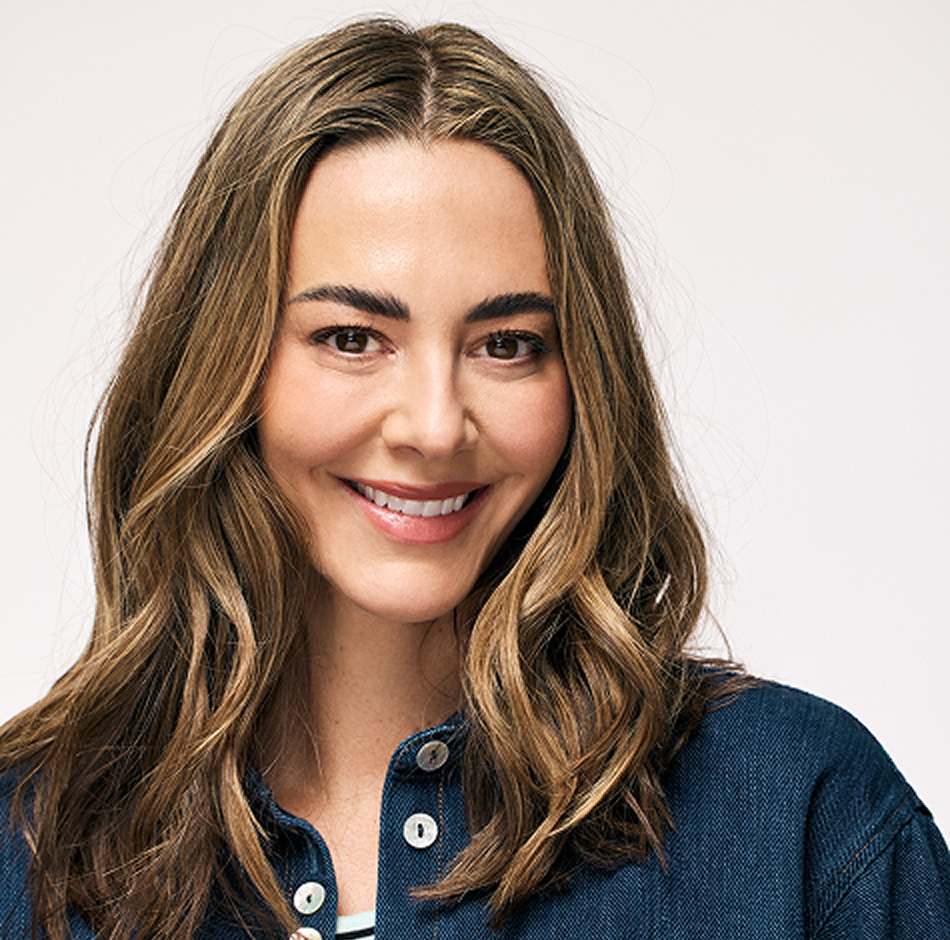
Pro-Aging, Confidence, and Grace: A Conversation with Barret
Barret Bestard, DNP is a JECT provider and a breast cancer survivor. Here, she shares what the experience has taught her about aging, confidence, and self-care.
October 15, 2026
As a provider in the aesthetics industry, how has going through breast cancer changed the way you think about beauty, confidence, and self-care?
Going through breast cancer at 32 changed how I think about all three. I've become 'pro-aging.' I truly believe aging is a gift, and I'm never trying to fight it. My goal is to support the aging process so that how my patients look and how they feel align.
You've continued your career while navigating treatment. What has that experience been like for you professionally and personally?
Continuing my career during treatment was so important to me. It made me realize how much my patients meant to me and how much joy my job brought me. Whether to work during active treatment is a very personal decision, one that should prioritize your health. I took a break during the most difficult part.
Has your experience as a patient changed the way you connect with or care for your own patients? If so, how?
Yes, absolutely. Being a patient gave me a deeper empathy for what women are carrying when they walk through our doors, whether it's a cancer diagnosis or another big life change. I understand now just how much our appearance is tied to how we feel in our bodies. I also know that sometimes the most important thing is simply being present and listening.
For someone going through cancer treatment who still wants to feel like themselves, how can they care for their skin, appearance, and sense of self, and what should they talk to their oncology team about first?
Health always comes first, but caring for your skin, appearance, and sense of self matters too. When everything is taken away, all you want is to feel normal. For me, monthly facials helped me keep a semblance of normalcy and self-care during treatment. Because there aren't many treatments you can do, I recommend a monthly facial and at-home sheet face masks to help support skin hydration and feeling confident in your skin. If you're looking to do more, I always recommend talking with your oncologist first about which injectables are approved during your specific treatment regimen. I think confidence comes from within, but small moments of self-care can help you feel like yourself while you're healing. Do what helps you feel like you.
Are there certain treatments or approaches you've personally found helpful for maintaining your skin and feeling your best throughout your journey?
Definitely. Beyond the facials and masks during treatment, in survivorship I am a firm believer in quarterly Dysport and LaseMD laser treatments, plus a vial of Sculptra annually to stimulate collagen in the skin. I also love a touch of lip filler as needed for lip hydration. All of these things support my skin health and help me feel refreshed, even when I don't feel that way all the time!
If you could speak directly to another woman who has just been diagnosed with breast cancer, what would you want her to know about continuing to feel like herself throughout the journey?
Take it one day at a time, and focus on the next step in front of you. You will change in so many ways, but not the scary ways you think. Take care of yourself in any way you can.
What has helped you maintain a sense of normalcy or joy during treatment?
Throughout active treatment, I went on daily walks through the park near my apartment in Brooklyn and fostered dogs, which kept me feeling a sense of purpose and routine when I wasn't working in the office. After treatment, I focused on regaining strength and started running again, something I did regularly before my diagnosis. I ended up running a half marathon with The Pink Agenda, a nonprofit supporting breast cancer research, and it felt full circle to regain my strength while supporting the future of breast cancer treatment. Crossing the starting line was symbolic of moving forward into a new chapter.
What did you learn most about yourself during this journey?
Honestly, a lot of what I learned about myself isn't necessarily surprising on paper, but experiencing it firsthand hit differently. I was stronger than I ever imagined. I learned how to actually ask for help. And I learned to give my body grace while it was healing.
Survivors often hear unsolicited opinions about how they take care of themselves. What would you say to people who want to weigh in on aesthetics as a form of self care?
Every survivor's journey is their own, and so is how they choose to take care of themselves. Self care can mean so many different things. Whether it's injectables, lasers, or something else entirely, it means whatever you want it to mean and whatever makes you feel good in your own skin. No one else gets a vote in that. We understand that more than most, and we know life is too short - do the Botox.